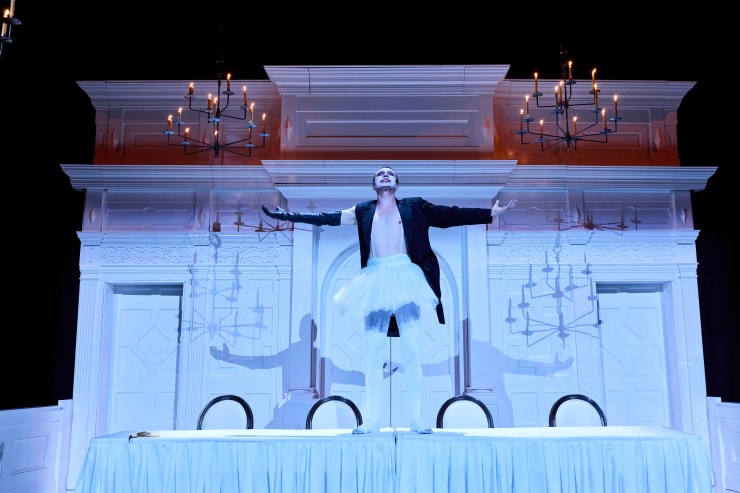
You wait years for stage productions to begin with a period of silence and then we get two in a week! Although adhering to the Mafia code of omertà, and the indication that what followed was going to be out of the ordinary, the opening scenes of Peter Grimes and A Midsummer Night’s Dream could not have been more different. The former saw the whole cast standing round a dead body on a stormy beach whereas the latter consisted of a single character, the sprite, Puck, clad in ragged dinner jacket, white tights and a tutu, enter a banqueting hall and perch himself on the table. After a few moments of reflection he reached into his leggings to produce a banana which he proceeded to eat, and I thought he was just excited to be in Leeds. He was silently joined by a woman who sat on the other end of the table, not as a character per se, but the British Sign Language interpreter who, for the moment was redundant. If you think that was weird, things got even more bizarre when the fruit was consumed and the action began.
The piece is one of Shakespeare’s comedies which, being written in the 16th century, is of its time and so employed the supernatural and fantastical characters prevalent in works of this era. Holly Race Roughan, had sought to make it more relevant to the present day by splitting the dialogue into two distinctive parts; the iambic pentameter, originally employed by the bard, in the ‘straight’ scenes, whilst creating an alternative universe for the comedy in the language of present day. Regular readers will know that I am not a fan of classic works being messed about with, especially when they concern real historical figures, but, this being a fantasy, and there needing to be reference points in comedy, I thought it worked quite well, although the purists who were familiar with the original seemed to differ. I must admit there were certain things which jarred.
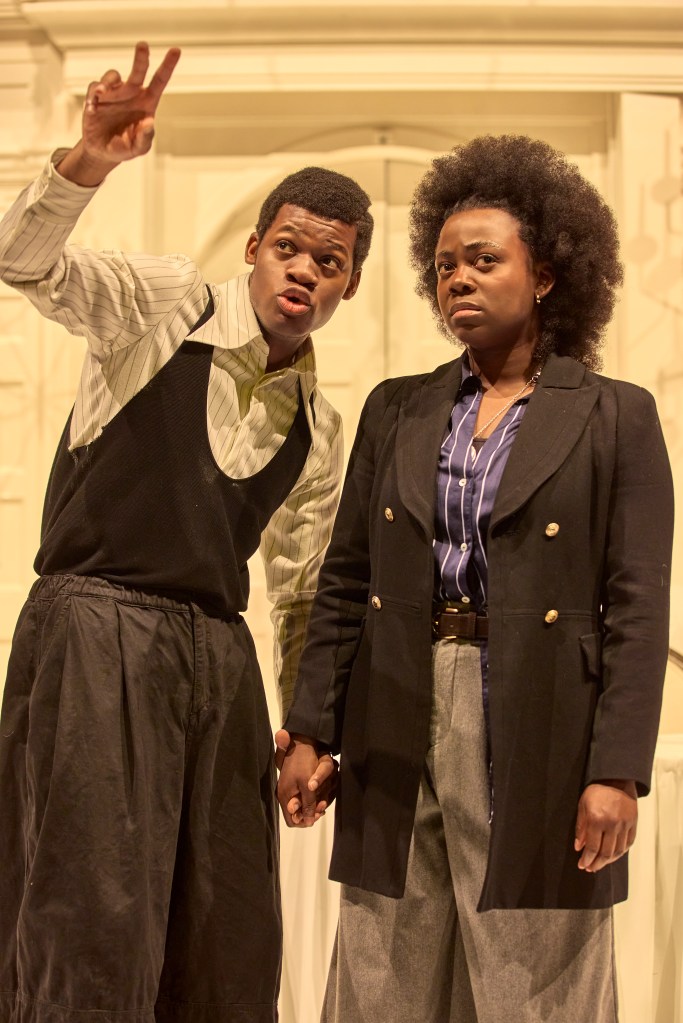
Although flitting between two writing styles the play was set in modern day Athens and was centred on the reluctance of Hermia to marry her father’s choice of suitor, Demetrius, as she is in love with Lysander. Egeus, Hermia’s father, asks Theseus, Duke of Athens and Demetrius’s dad to invoke an ancient law and put Hermia to death if she refuses the union. Hardly, likely in the 21st century. Then again…
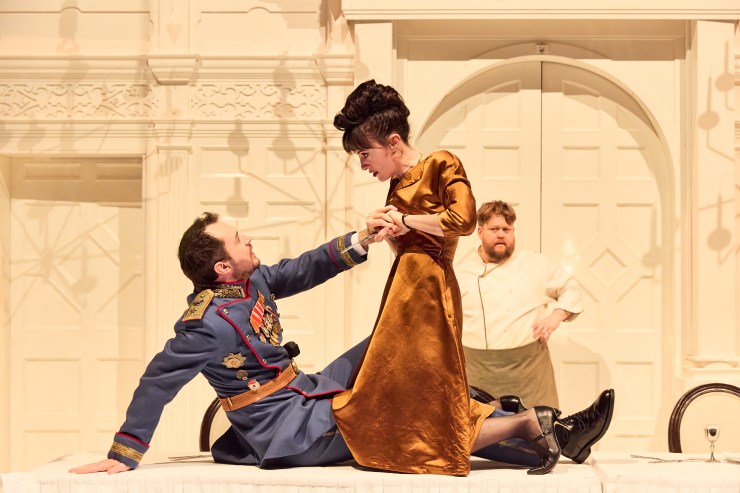
There are other couples who are in love with people who they shouldn’t be, but through the use of extract from a flower with magical powers, some of them are ‘treated’ whilst asleep so that when they awake, they will fall madly in love with the first person they see. The idea is sound but the practicalities less so, as when they rise from their slumbers the intended love interest is elsewhere and so they then get the hots for someone else who is inappropriate. The prime example being the chef in the hotel who is in charge of the wedding banquet, but has been turned into an ass by Puck – don’t ask – and becomes the lust object of Titania, Queen of the Fairies.
Fortunately there is an antidote to the flower juice and so it is administered to revert to the status quo.
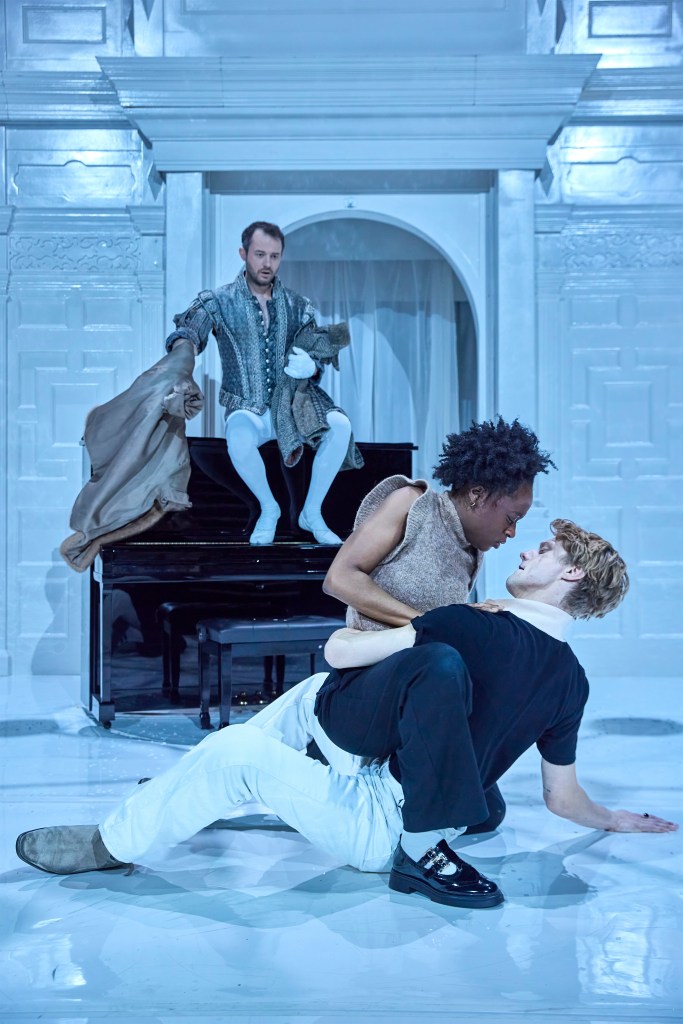
A further subplot is that a group of actors, comprising the hotel workers, put on a play to conclude the banquet, but it is a tragedy and the staging is a disaster causing Thesius to believe it is a comedy and show his disapproval in an extreme manner.
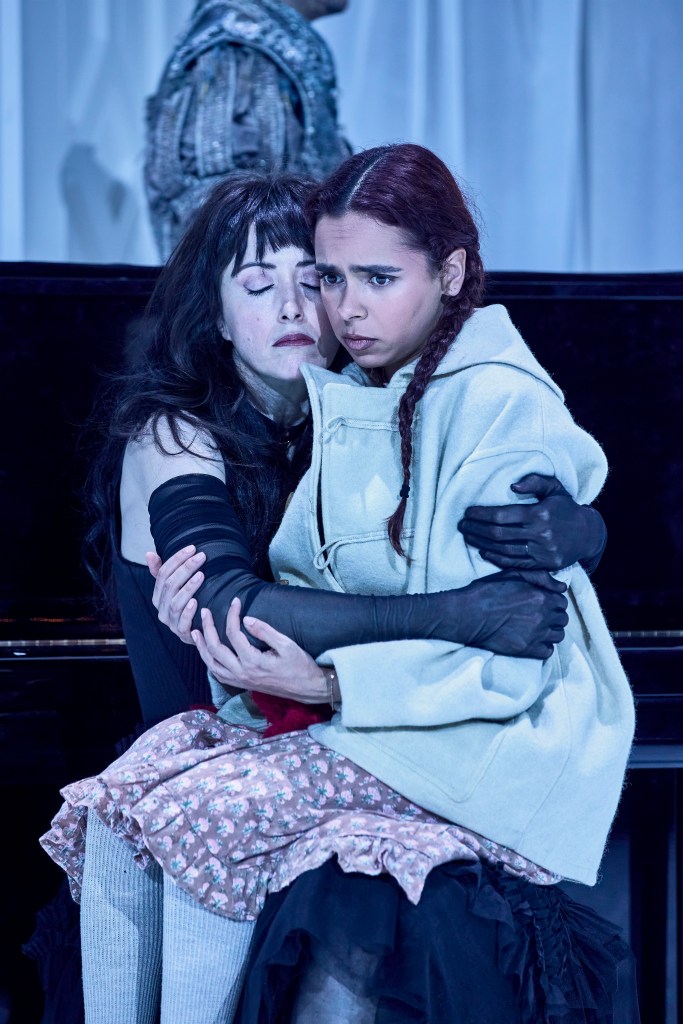
The acting in each of the parallel universes was good, the Shakespearian poetry delivered at a cracking pace, and the modern humour brilliantly doled out by Danny Kirane as Bottom, the Yorkshire chef, and some time ass. He was more in the mould of firebrand, Marco Pierre White, than affable James Martin, so bolshy to say the least. His one-liners were great as was his tottering about on hooves to indicate his species swap.
The music was also from the (nearly) present day, with a rendition of Tears For Fears’ Mad World, although being accompanied only by piano, sounded more like the Gary Jules cover, and what would a wedding be without a blast of Robbie Williams’ Angels.
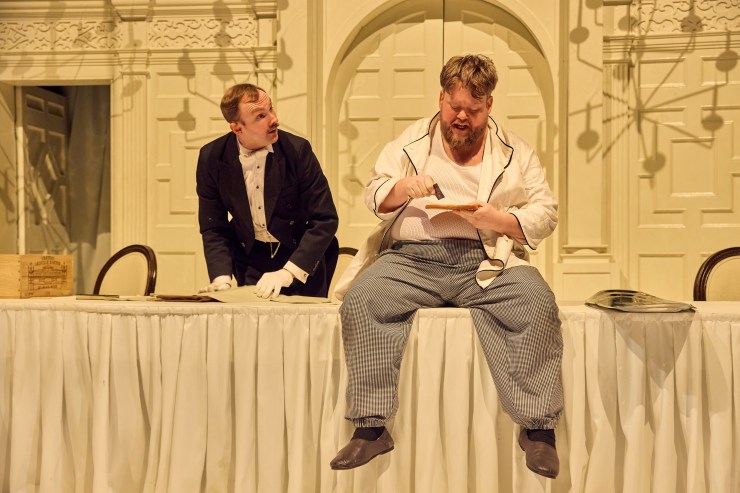
The set was as bewildering as the plot and the timescale, being the interior and exterior of the grand hotel, regardless of whether the action was in Athens or the forest in the countryside, when a door would be opened to reveal a piano or other piece of incongruous bucolic furniture.
Never having seen the original, I looked up the final scene, which was nothing like the denouement of the version I saw which turned the whole work upside down. If it was supposed to be the traditional comedic ending someone needs therapy. All I can say is that, if, like me, you are not watching with a preconceived idea of the play wot Shakespeare wrote, you will get a good few laughs and wonder where you can get a bottle of whatever, Ms Roughan was drinking when she came up with the concept of this production. Should you be a purist then this might come as a total shock to you.
Midsummer Night’s Dream is at Leeds Playhouse until 28th February after which it moves to Bristol Old Vic from 4th to 21st March and Oxford Playhouse, 24th to 28th March.
Feature image by Felicity McCabe
Photographs by Rich Lakos

